

‘Holy Sonnet 10’ by John Donne (1571-1631)
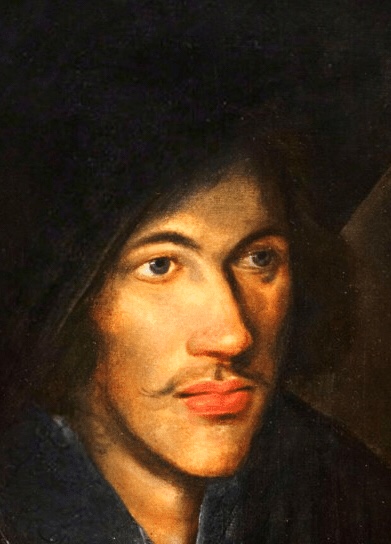
Death, be not proud, though some have called thee
Mighty and dreadful, for thou art not so;
For those whom thou thinkst thou dost overthrow
Die not, poor Death, nor yet canst thou kill me.   4
From rest and sleep, which but thy pictures be,
Much pleasure - then, from thee much more must flow;
And soonest our best men with thee do go,
Rest of their bones and soul’s delivery.                       8
Thou’rt slave to fate, chance, kings, and desperate men,
And dost with poison, war, and sickness dwell;
And poppy or charms can make us sleep as well,
And better than thy stroke. Why swellst thou then?
One short sleep past, we wake eternally,
And death shall be no more. Death, thou shalt die.
Considering the Poem
After reading just the first few words of this poem, Donne’s contemporaries would have understood that a challenge to a duel is the underlying situation on which the poem is built. The speaker seeks satisfaction for the insult to his human pride and his honour made by the very fact of death. The first words challenge Death. The final four words of the poem echo those first four words in rhythm, form and style but are conclusive and confident in tone. They assert the Christian victory (‘Death, thou shalt die’) but not until the poem has dramatized the terror of the human duellist in the face of his overbearingly powerful opponent and presented the argument he makes to put Death back in his true and proper place.
The poem jumps into life with a ferocious four-word attack. It’s as if the speaker calls his enemy out from a crowd, demanding he answer the charges against him.
However, while the speaker acts fiercely (like the hot soldier who is “Jealous in honour. sudden and quick in quarrel” in Jacques famous speech from ‘As You Like It’), he seems, in fact, to be terrified by his opponent.
The tone of voice in the parenthesis immediately following the opening words, (“though … dreadful”, 2-3), does not ring with real courage. It has undertones of bravado, or even petulance. A more confident tone is re-asserted at the end of the four-line section, or quatrain, (3-4), but the next eight lines of the sonnet, the body of the poem, will try to prove by argument the speaker’s assertion that Death cannot kill him (4). So, what follows until the final couplet (13-14) is illustration, evidence and explanation supporting that assertion.
The speaker’s first step is to argue by analogy that since sleep and rest are pleasant, death, a more serious version of both, must also be pleasant, especially since the best men go first from life (7), the speaker taking this to imply a choice rather than an injustice randomly doled out by Death. By now, ironically, our speaker is, of course, talking for victory rather than actually duelling, so again we might wonder about how certain he really is and whether his taunting has some sublimated anxiety in it, leaving us unsure what he really believes about conquering his enemy Death.
The third quatrain (9-12) continues to denigrate the powers of Death, using illustrations to show that Death’s proud powers can be stolen by a listed set of lesser beings, substances and chance events. All these things serve just as well as a blow or a ”stroke” (12) – a technical sword-fighting term – from the enemy himself. Throughout the poem, the speaker uses the less respectful pronoun ‘thou’ (rather than using the more formal ‘you’) to address his adversary and the contempt for Death reaches a climax as the argument reaches its finale with the paradox that Death cannot succeed in killing and hasn’t a right to his puffed up pride (12).
Donne was a priest. The Christian truth is that death does not succeed, of course, and there are many biblical and liturgical precedents for the speaker’s conclusion in the final four words of the poem. The speaker, therefore, is right to conclude confidently that “Death, thou shalt die” (14). But the poem, by incorporating the speaker’s bravado and nervy arguments, also, ironically, contains the opposite of that confidence – a very human, alarmed and fearful apprehension. The voice in the poem speaks out for all of us.
 Christian Poetry Considered