

‘When I Consider how my Light is Spent’ by John Milton (1608-1647)
When I consider how my light is spent,
Ere half my days, in this dark world and wide,
And that one talent which is death to hide
Lodged with me useless, though my soul more bent 4
To serve therewith my Maker, and present
My true account, lest he returning chide,
‘Doth God exact day-labour, light denied?’
I fondly ask. But Patience, to prevent                          8
That murmur, soon replies: ‘God doth not need
Either man’s work or his own gifts; who
Best bear his mild yoke, they serve him best. His state
Is kingly: thousands at his bidding speed,                 12
And post o’er land and ocean without rest;
They also serve who only stand and wait.’
Considering the Poem
In his book ‘Paul’s First Letter to Corinth’ (Pelican, 1971), commenting on Paul’s advice to the Corinthians who ‘wait for the revealing of the Lord’ (1, 7) John Ruef says: ‘This is the proper posture for Christians. They wait.’
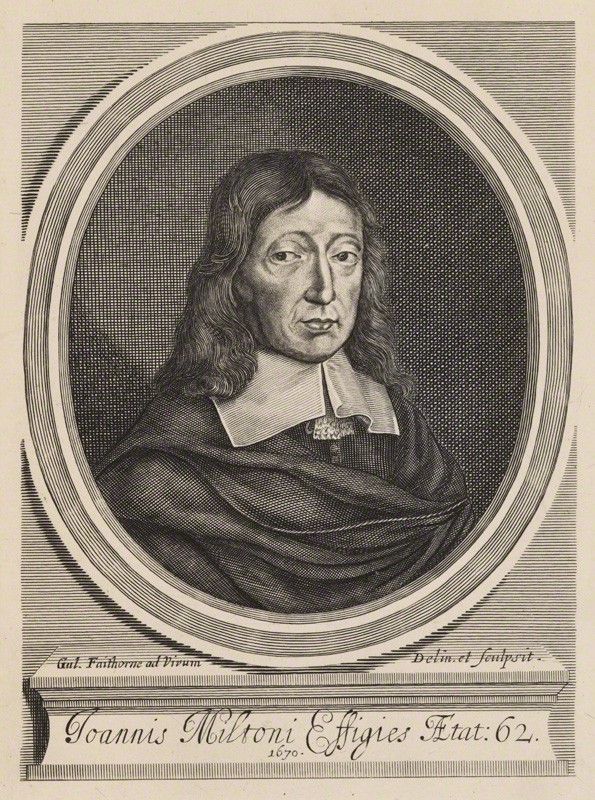
By 1652, at the age of 43, Milton had gone blind. The first eight lines of this poem are about the threat that the blindness posed to his continued work and usefulness; the last six lines are a response to this threat, ending in a resolution.
Through a conversation, firstly, with himself (1-8) and then, with the personified figure of Patience, Milton discovers that God’s purposes for him, and God’s view of his worthiness, may actually take more into account than just his world work in the world.
The process of thought starts in something close to despair. Milton uses two parables – the parable of the talents, and the parable of the vineyard labourers – to present his thinking in the poem. He could assume that the parables were familiar to his readers and that they would respond to the images of light and dark which pull them, and us, into the poet’s ‘dark world and wide’ (2). Milton then states the other part of the problem: his darkening sight does not stop his desire to ‘serve’ (5) and to present the outcome of his work, his ‘account’ (6), to his ‘Maker’.
The question ‘Doth God exact day-labour, light denied?’ (7) sets off what we might nowadays expect to be a prolonged outbreak of complaining about God’s expectations of Milton . However, the word ‘But’ (8) and the introduction of the new speaker, ‘Patience’, sharply changes the direction of thought. The discontented murmuring (the word also used about the complaints of the vineyard labourers in the King James version of the parable) ends. In the final six lines of the poem, ‘Patience’ addresses Milton (with us overhearing), telling him that faith matters to God, not just a man’s works and achievements – even achievements as great as Milton’s – and that God’s grace will be freely given to those, like Milton, who suffer in quiet humility.
For a 17th century sonnet, the poem has very few verse lines that stop at the end of the line. Often, too, the sentence running over the line-end has a very abrupt pause during or even near the start of the following line (3-4, 8-9, 11-12). All this seems to cause a fitful rhythm, maybe just how this kind of agonised thinking does really feel? In contrast with what has gone before, the clear, confident resolution in the famous, final line is given power by its regular, alternating pattern of strong and weak pulses.
Milton is told that, really, all he need do is ‘stand and wait’ (14), that waiting is an important activity. So the poem ends with a graceful and illuminating insight, replacing, for a moment, Milton’s lost bodily sight and the darkness that loss entailed.
 Christian Poetry Considered