

‘Pax’ by D. H. Lawrence (1885-1930)

All that matters is to be at one with the living God
to be a creature in the house of the God of Life.

Like a cat asleep on a chair
at peace, in peace
and at one with the master of the house, with the mistress,
at home, at home in the house of the living,    6
sleeping on the hearth, and yawning before the fire.

Sleeping on the hearth of the living world
yawning at home before the fire of life
feeling the presence of the living God
like a great reassurance
a deep calm in the heart                          12
a presence
as of the master sitting at the board
in his own and greater being,
in the house of life.
Considering the Poem
It doesn’t take long for us to get the main idea here: we have something to learn from a dormant cat.
After the assertion in the first short sentence (1-2), we don’t have to read much further – perhaps only up to the simile ‘Like a cat’ (3) – to understand that Lawrence wants to use the poem to create a pervasive sense of calm and quiescence and to connect that state of insightful repose with a mysterious insight into the presence of God. The vehicle he uses to achieve the communication of these ideas is primarily the central simile that presents the cat’s ‘peace’ and its trusting oneness with its owners as a paradigm for how we might achieve a trust in God’s protecting presence. As often in Lawrence’s writing, the ideal state of mind he is presenting is not rational but insightful and emotional. Shocking though it is, the recommendation that we should imitate the domestic cat when seeking enlightenment does, because the sleeping animal is completely natural and non-cognitive, embody Lawrence’s philosophy of feeling and insight.
But the poem is not solely based on the cat simile. Lawrence uses all the skills that the craft of verse-writing makes available to him to create a pervasive sense of calm: the relaxed tone of voice that Lawrence uses to speak to us starts with the friendly and advisory opening words, and colours the whole poem; the writing has a relaxed pace, too, that works well with, and is a formative part of, the tone of voice; and the poem is made from just three sentences arranged in three verse paragraphs, each one longer than the one before, unfolding with a calm and leisurely pace, sinuously.
Pace – or the speed with which new information is given in a poem – is an important element in any writing but, because it’s not obvious, its contribution to the overall effect of a poem is easily overlooked. Too fast and the result is incomprehension and a frustrated reader. Lawrence keeps an unhurried pace here by adding new information bit by bit, incrementally, and in small add-on utterances (that linguists call paratactic). The longer lines sometimes have two new bits of information (as in ‘sleeping on the hearth, and yawning before the fire’, for example) but generally each line adds only a single piece of new information, and easily grasped information too – maybe a visual detail or a simple description of an internal state (such as the phrase ‘a deep calm in the heart’).
The musical elements of the writing are also formative. The rhythms of the poem are informal and very much the rhythms of open, amiable speech. Other musical effects also contribute to the peaceful tone of the verse: a kind of chiming, for example. We see (or rather, hear) that chiming in the repetitions: ‘at peace, at peace’ (4); ‘at home, at home’ (6), and even in the repeated ‘-ing’ sounds at the start of each of the first three lines of the final verse. It’s an unusual stylistic feature and works harmoniously and elegantly here.
The vocabulary Lawrence uses (other than the Latin word for peace in the title, maybe) is purposefully restricted and, in a way, also repetitious. But the repetition is repetition with variation because what Lawrence does is to stick very closely to clusters of words with similar connotations, or associations. The two most obvious clusters here are, firstly, a group of words to do with untroubled and unthinking quietness, many of which centre on the image of the thought-free cat (‘asleep’, ‘sleeping’, ‘calm’, ‘peace’, ‘yawning’) and, secondly, a word-group to do with just existing passively, like the cat, without self-consciousness or striving (‘life’, ‘living’, ‘presence’, ‘feeling’, and so on). Both clusters include words with strong connotations of natural calm.
The poem ends where it began, with the image of the ‘living God’ (1) reposing in ‘the house of life’ (16), perfectly ‘at one’ with himself and with others. This patent rounding-off and completion at the end of the poem is, of course, calming in itself. So, Lawrence uses his craft skills to make what is, in its concentration on quietude and repose, an unusual Christian poem, maybe reminding us of the meditative withdrawal we find in Buddhism and other eastern religions. It also reminds us how often Christian poetry is, one way or another, concerned with inner spiritual strive and struggle – a struggle that D H Lawrence seems to be advising us sometimes to leave aside so that we may find peace and trust in the quietness of simply existing.
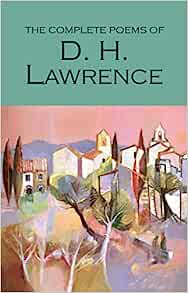
£4.99 paperback/ £2.99 Kindle (at time of writing)
 Christian Poetry Considered