

‘Quickness’ by Henry Vaughan (1621-1695)

False life, a foil and no more, when
                    Wilt thou be gone?
Thou foul deception of all men
That would not have the true come on.  4

Thou art a Moon-like toil, a blind
                       Self-posing state,
A dark contest of waves and wind,
A mere tempestuous debate.         8

Life is a fixed, discerning light,
                       A knowing Joy;
No chance or fit, but ever bright
And calm and full, yet doth not cloy.    12

‘Tis such a blissful thing that still
                       Doth vivify
And shine and smile and hath the skill
To please without eternity.       16

Thou art a toilsome Mole, or less;
                        A moving mist;
But life is, what none can express:
A quickness which my God hath kiss’d.   20
Considering the Poem
Some poems – perhaps all of them, to some extent, or in some way – get their strength and structure from various oppositions or contraries that push against one another to keep the verbal construction sound and standing, like a building with its balanced and opposed weights and stresses.
Here, Vaughan holds the strong emotions of the poem in place by containing them in in an orderly verse framework. Also, the two elements of the poem’s subject – the false and the true life – provide formal strength and continuity by being kept in a sustained opposition from start to finish.
The poem begins with an explosion of vehement abuse of what Vaughan calls ‘False life’ (1) – our daily life, in fact, that, in his view, is unreal and deceptive, tricking us by obscuring ‘the true’ (4) life: it is an impediment, a ‘foil’ (1); it’s a ‘foul deception’ (3); it’s a changeable, infertile ‘Moon-like’ (5) thing, a tempestuous ‘contest of waves and wind’ (7) and a cause of vain self-concern (6).
But then the insults abate and the tone of Vaughan’s language changes. The first verse began with the shout ‘False life’ (1); the third verse begins by calmly marking what is to come as a definition of true life: ‘Life is’ … (9).
The insults are replaced with a series of celebrations of the fragile insight that we may have of a true life that’s bigger than our own temporary and troubled existence.
Images of light and joy fill these verses: true life is ‘fix’d’ (9) and constant; its light is ‘bright/And calm and full’ (11-12); it brings insight in a ‘knowing Joy’ (10). Awareness of this true life brings bliss and, we are told, pleases and consoles us while we are outside, or ‘without’ the eternal world (16).
It’s at this point in the verse that we can see how Vaughan has contained the poem’s strong contrary emotions within bounds by balancing them against each other inside a painstakingly orderly verse form.
Each verse is firm and elegant on the page, its shape constant through the poem, the versification repeating the rhyme scheme and the standard line lengths with each second line being exactly half the length of the others (in syllables and iambic units of rhythm). This verbal structure gives a formal integrity to the poem.
The final verse has a summative job to do. Both the false and true are contained in miniature at this point, given two lines (rather than two verses) each. As a coda might do in music, the theme of the first two verses is recapitulated briefly, starting with a sharp insult in which the false life is imagined as a ‘Mole’ (17), an earth-bound creature if ever there was one, contrasted with the true life – a ‘quickness’, or livingness, blessed and ‘kiss’d’ (20) by God which we may know intuitively but cannot express clearly, and without making the creative efforts that the poet has made here.
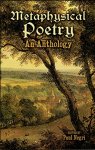
‘Metaphysical Poetry’: An Anthology (Dover Thrift Editions)
 Christian Poetry Considered